The Sunflower guide
The Sunflower Lanyard
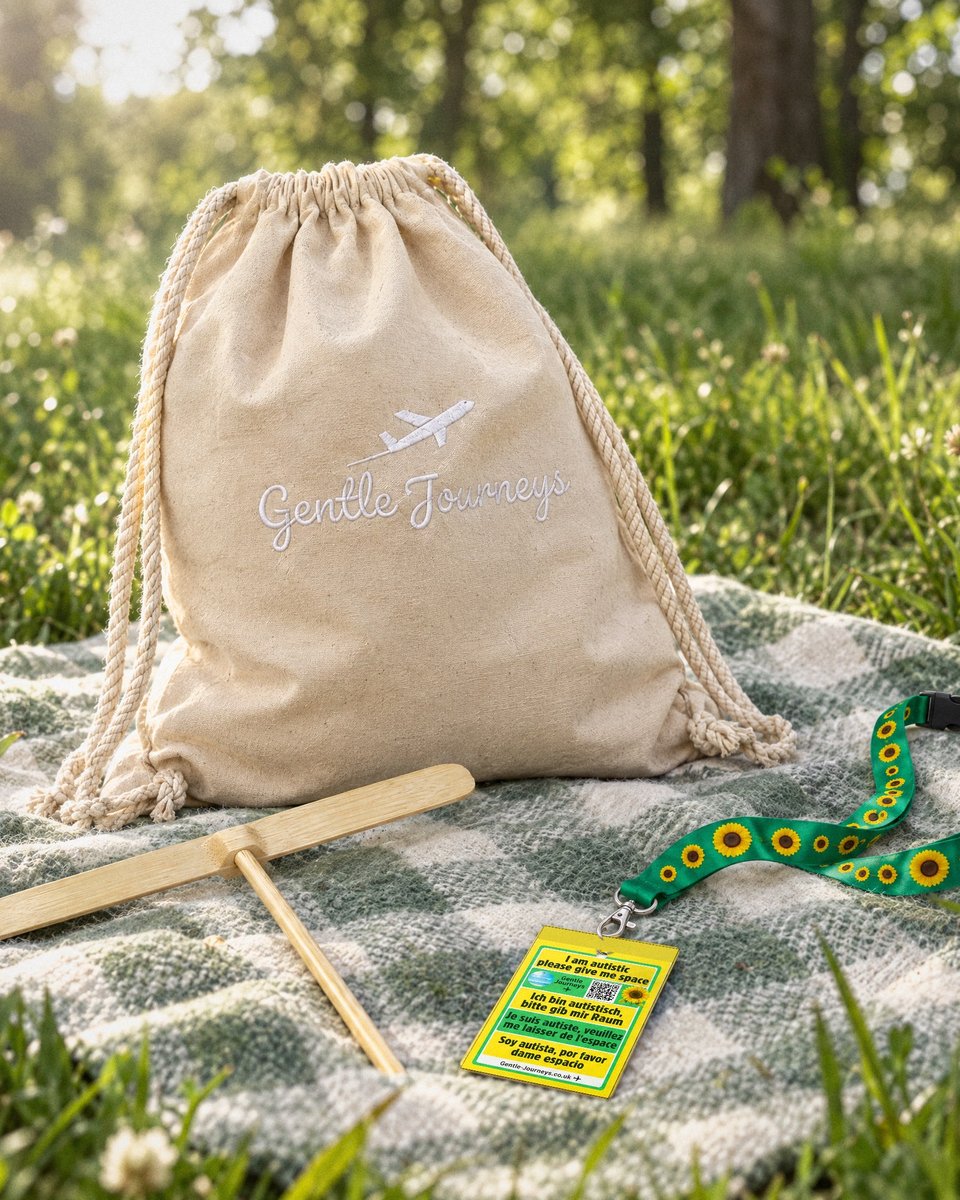
Our card says it for your child in English, German, French and Spanish, so staff can read it in four languages. It comes in every travel bag, and on its own.
What the card says
Non-verbal card
- EnglishI am non verbal, please give me extra time
- DeutschIch kann nicht sprechen, bitte geben Sie mir mehr Zeit
- FrançaisJe ne parle pas, veuillez me donner plus de temps
- EspañolNo hablo, por favor dame más tiempo
ADHD card
- EnglishI have ADHD, please be kind and patient
- DeutschIch habe ADHD, bitte seien Sie freundlich und geduldig
- FrançaisJ'ai un TDAH, veuillez être gentil et patient
- EspañolTengo TDAH, por favor sea amable y paciente
The official scheme
Hidden Disabilities Sunflower
What the Sunflower means, where it's recognised and how to get a lanyard, from the scheme itself. Our card is our own design, made to clip onto the official lanyard.
What the card does
Recognised support
Staff trained in the Hidden Disabilities Sunflower scheme know it means "please be patient".
Four languages
The same request in English, German, French and Spanish, so staff can read it in four languages. See the card.
Calm and discreet
Worn comfortably round the neck, or clipped straight onto a bag or backpack.
Fewer explanations at the desk.
When everything feels louder, brighter and faster, the last thing a family needs is to stop and explain. The Sunflower tells staff who know the scheme that you may need a little more time, so you can focus on your child.
The Sunflower lanyard: what it means and where it works
The Hidden Disabilities Sunflower is a simple way to show, without saying a word, that you or your child has a disability that isn't obvious and might need a bit more time, help or understanding. It's recognised worldwide, not just in the UK, and you don't need anyone's permission to wear it.
I'm Jenna, mum to an autistic son and co-founder of Gentle Journeys. I started it because I couldn't find the right kit to take my son away with confidence, so I made it. This is the guide I'd hand any parent before their first trip with a Sunflower.
What the Sunflower means
The sunflower is a signal, not a label. When you wear it, you're telling people who know the scheme that you might need extra help, understanding, or just more time. That's it. You don't have to say why.
The scheme says it in its own words: wearing the Sunflower is "a personal and voluntary choice". You don't need to show proof, and you don't need to explain your disability to anyone.
The scheme chose a sunflower because it's discreet but easy to spot from a distance, and because it stands for happiness, strength and confidence. It doesn't read as a medical label, and for a lot of families that matters.
What it doesn't do
This is the bit people get wrong, so here it is plainly. The Sunflower doesn't skip the queue. The scheme itself says it "does not automatically provide priority access, fast-track services or a place at the front of a queue."
It isn't proof of anything, and it doesn't entitle you to a particular service. What it does is change the first conversation. Instead of you explaining, staff who've been trained in the scheme start from "how can I help?"
Some airports do offer extra help to families who ask for it, like a quieter place to wait or more time at security. That's each airport's own choice. Check what yours offers before you travel.
Who can wear one
Anyone who feels they'd benefit. There's no list of conditions you have to be on. The same goes for children with ADHD, children who don't speak, children with anxiety, and adults too.
It also doesn't have to be your child who wears it. Some children won't have anything round their neck. A parent can wear it, or it can be clipped to the bag they carry. The point is that staff can see it.
You choose when to wear it, too. Some families only put it on for the airport. Some keep it on the bag all year.
Where it's recognised
The Sunflower started at Gatwick Airport in 2016, and it was developed with charities including the National Autistic Society. It has since grown into a worldwide network.
The scheme's own airport list says more than 325 airports around the world have launched it. In the UK that includes Exeter, Bristol, Cornwall Airport Newquay, Cardiff, Birmingham, Manchester, Gatwick and Heathrow, among many others. Abroad, the list takes in airports across Europe, North America, Australia, New Zealand, the Middle East and beyond.
It isn't only airports. Shops, railways, coach and bus services, ferries, theme parks, theatres, football clubs, hospitals and councils have joined as well.
The places that join are called Sunflower members, and they commit to training their staff to understand the Sunflower. So the honest version is this: it's recognised by the people and places who've signed up, and that number grows every year. Before a trip, look up your airport and your destination on the scheme's Sunflower map. (We checked all of this against the scheme's own site in October 2026.)
How to get an official Sunflower lanyard
Sunflower lanyards are free from businesses that are Sunflower members. Many airports hand them out at their assistance desks. The scheme suggests checking your airport's accessibility page to see whether it gives them out and where to collect one. You can also order from the scheme's own online shop if you'd rather have it posted to you.
Our card comes with one official Sunflower lanyard, free, and so does every one of our travel bags. We never sell the lanyard itself. Only the official design is the one staff are trained to recognise, so that's the one we include.
Why we made a card that says it in four languages
Here's the gap we kept coming back to. The sunflower travels well. The explanation doesn't.
At home, staff who know the scheme see the lanyard and know to give you a bit more time. In another country, the lanyard still gets noticed, but if they don't speak English, it's hard to tell them what your child actually needs.
So we made a card that does the explaining. It clips onto the Sunflower lanyard, or straight onto a bag, and says one clear sentence in English, German, French and Spanish. There are three designs:
- Non-verbal: "I am non verbal, please give me extra time"
- ADHD: "I have ADHD, please be kind and patient"
- Autistic: "I am autistic please give me space"
Our card is our own design. It isn't an official Hidden Disabilities Sunflower product, and we're not part of the scheme. It's made to sit alongside the official lanyard, so the sunflower gets noticed and the card says the rest. See the card, or the sensory travel bags, which each come with a lanyard attachment and a free official Sunflower lanyard.
Using the lanyard on the day
- Put it on before you go in. Staff can't respond to what they can't see. Lanyard on in the car park, not at the desk.
- Say one sentence early. At check-in and again before the security trays: "My son is autistic and may need a bit more time." The lanyard opens the door; the sentence does the rest.
- Practise wearing it at home. If it's new, let your child wear it round the house or on a short trip first, so it's familiar on the day.
- Have a plan B. If your child pulls it off, clip it to their bag or wear it yourself. It still works.
For the whole airport day, from booking to landing, there's our guide to flying with an autistic child, and our airport help page.
Sunflower lanyard questions
What does the Sunflower lanyard mean?
It shows that the person wearing it, or the person they're with, has a disability that may not be obvious and might need more time, help or understanding. You don't have to explain why you're wearing it.
Does the Sunflower lanyard let you skip queues at the airport?
No. The scheme says it doesn't automatically give priority access, fast track or a place at the front of a queue. Some airports offer extra help to families who ask. Check with your airport before you travel.
Is the Sunflower lanyard recognised abroad?
Yes, at the airports, airlines and other places that have joined the scheme around the world, not just in the UK. The list changes, so check your destination on the Sunflower map before you go. About the Sunflower scheme.
Can you get a Sunflower lanyard for ADHD?
The scheme has no list of qualifying conditions. Anyone who feels they'd benefit from more support, understanding or time can wear one.
Do I need proof to wear a Sunflower lanyard?
No. The scheme says you don't need to provide proof or explain why you're wearing it.
Does my child have to wear it?
Not at all. It can be worn by your child or by you, clipped to a bag, or kept to hand. It simply gives the option of quiet, recognised support.
What's included with the card?
Our 4-language Sunflower lanyard card in the design you choose, and one official Sunflower lanyard free. Every one of our sensory travel bags comes with a lanyard attachment and a free official Sunflower lanyard too.
Is your card an official Sunflower product?
No. It's our own card, made to clip onto the official lanyard. The official lanyard that comes with it is the real thing, and it's free.
No question matches that. Try another word, or ask us. Contact us
Travelling soon?
Get the card on its own, or packed in one of our sensory travel bags (every bag already includes it).
If you're not sure whether the card or a bag is right for your family, ask us. We're a small team and we reply ourselves.